Our Featured Listings in the Area
- previous
- next
Jackson Pollock did not come to the East End for the social scene. He came because the light on the potato fields reminded him of the American West, and because the isolation of Springs gave him room to work without an audience. Lee Krasner came with him and built a practice of her own in the same barn studio. Willem de Kooning followed, drawn by the same combination of open sky and creative privacy. By the early 1950s, the farmland surrounding East Hampton had become the most important proving ground for American art since the Armory Show.
That history is not incidental to the real estate market. It shaped the village's identity in ways that persist today. East Hampton carries a cultural seriousness that distinguishes it from the rest of the Hamptons -- a place where Guild Hall can host an exhibition opening on the same evening that the estate section south of the highway sits in near-total darkness. The village holds both realities without contradiction.
"East Hampton carries a cultural seriousness that distinguishes it from the rest of the Hamptons -- a place where Guild Hall can host an exhibition opening on the same evening that the estate section sits in near-total darkness."
East Hampton Village was settled in 1648, making it one of the oldest English settlements in New York. That history is legible in the village center, where a walkable Main Street still functions as the commercial and social anchor. The scale is deliberately modest -- no building overwhelms the streetscape, and the canopy of elms that once defined the road has been replanted over generations to maintain the original character.
The Maidstone Club, founded in 1891, occupies the southern end of the village and remains one of the most private institutions on the East End. Its presence establishes a social geography that orients much of the surrounding residential market. The village itself is compact enough that daily life can be conducted on foot, a practical advantage that distinguishes East Hampton from most of the Hamptons, where driving is the default.
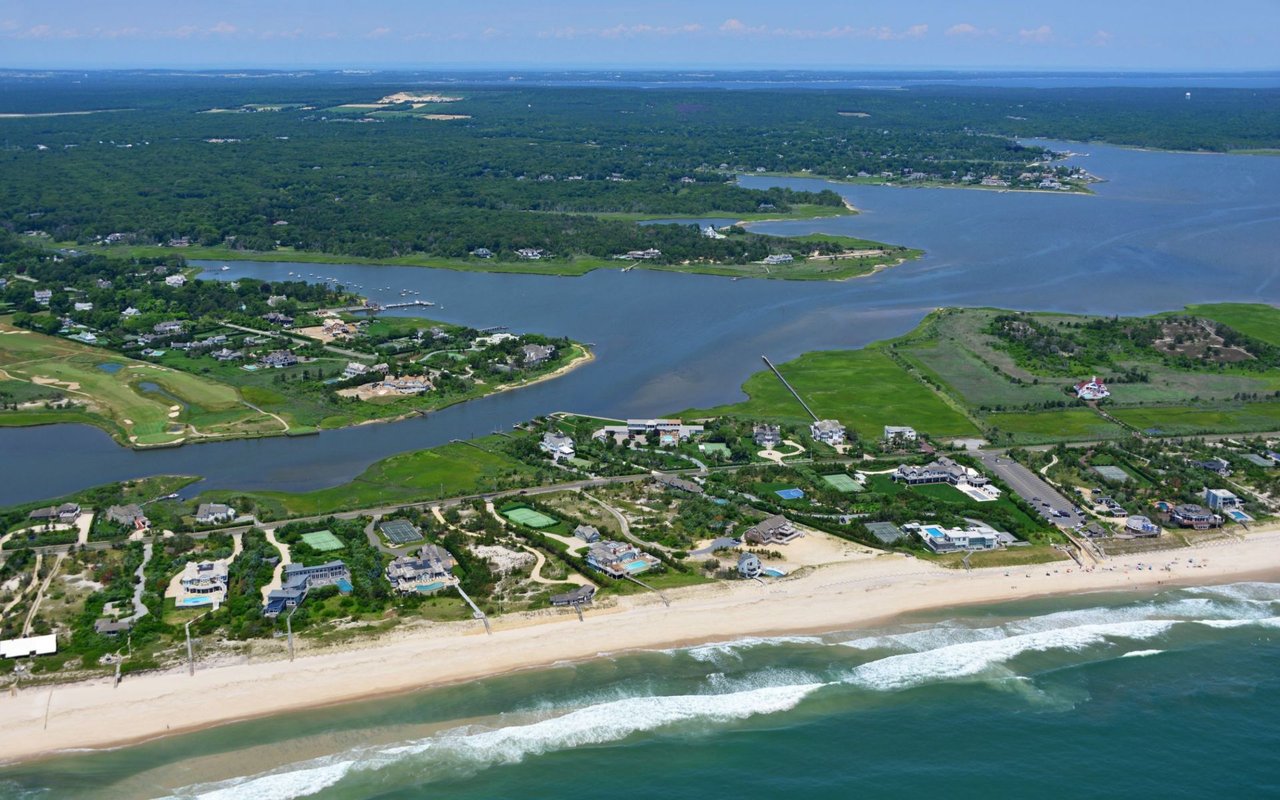
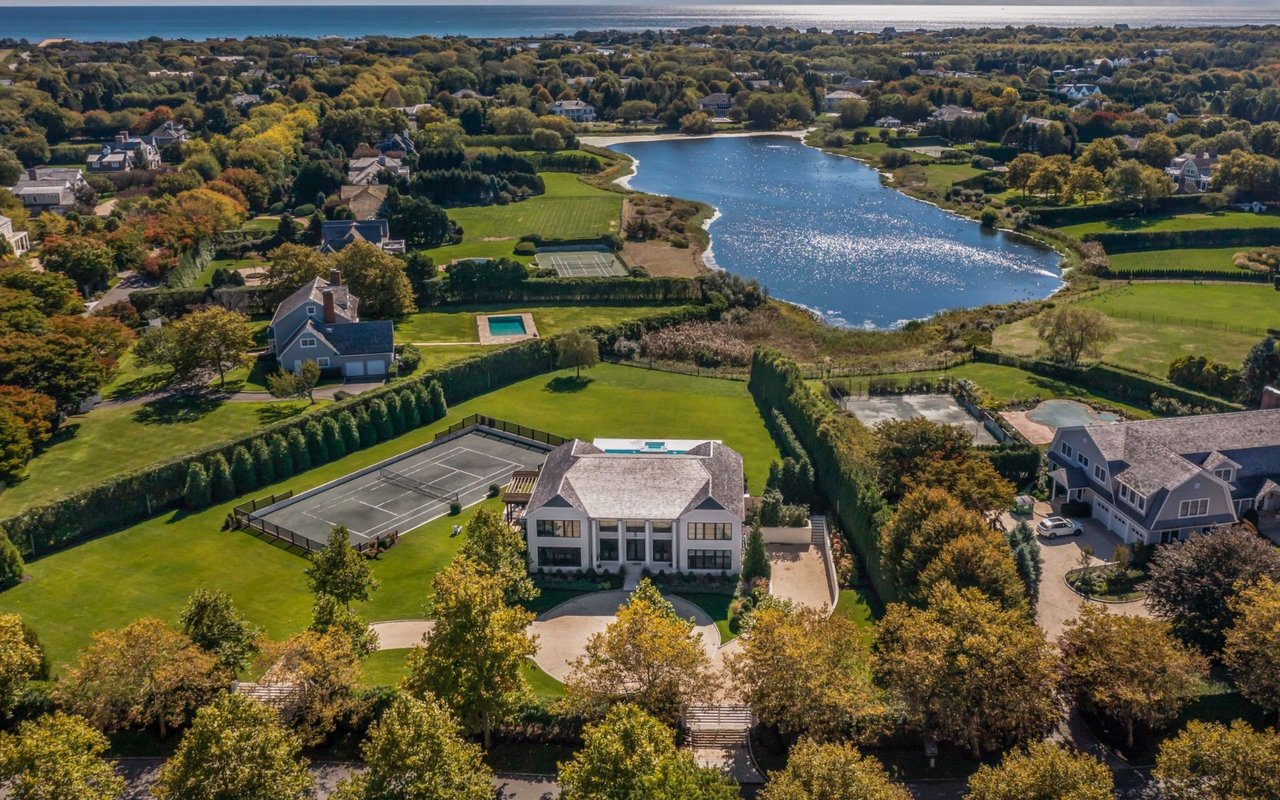
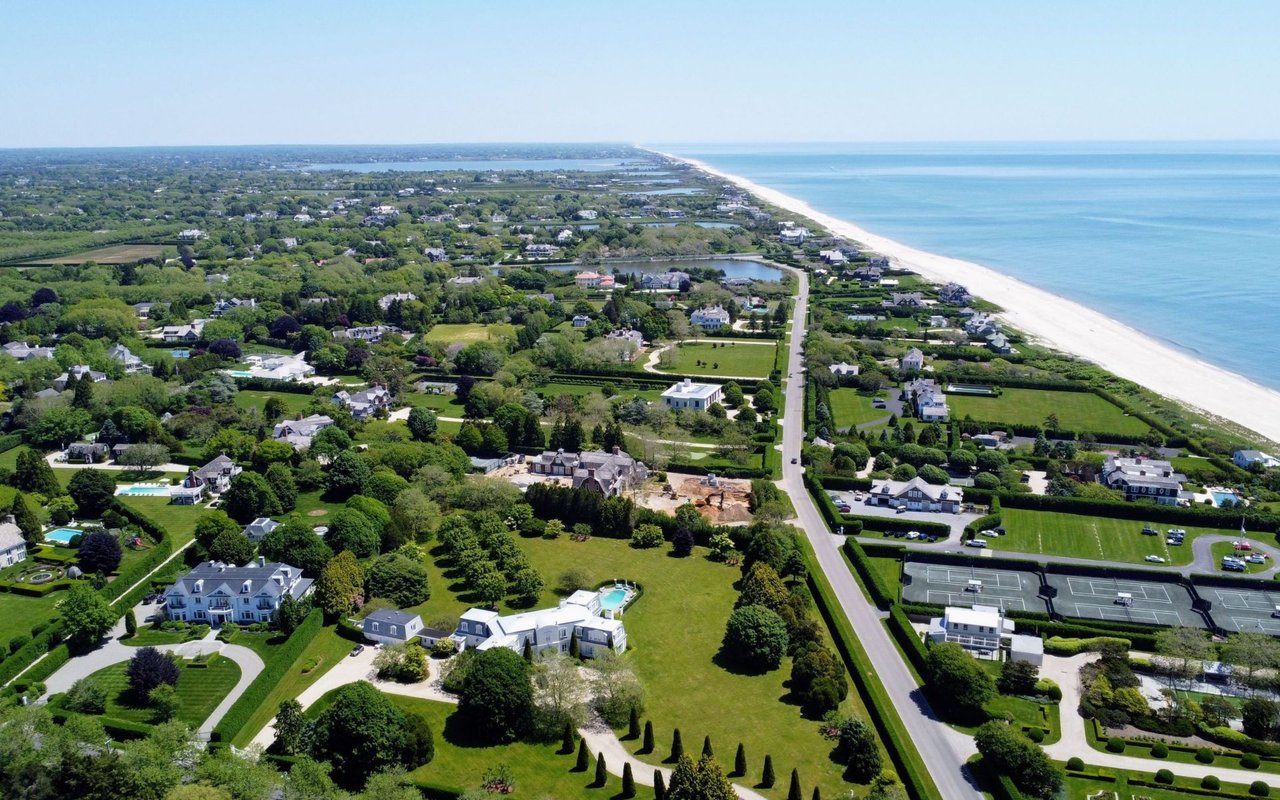
South of Montauk Highway, the character of East Hampton shifts entirely. The village's walkable center gives way to hedged lanes where properties are measured in acres and where the houses themselves are often invisible from the road. Further Lane is one of the most significant residential addresses on the East End -- a road where the ocean is audible but rarely seen from behind the privet. The buyers who pursue this inventory understand that privacy at this level requires patience. Properties here trade infrequently, and the most consequential sales often happen before a listing reaches the open market.
Georgica Pond occupies a category of its own. The freshwater lake sits surrounded by estates that change hands so rarely they barely register as part of the active market. The pond's geography creates a double seclusion -- waterfront without the exposure of oceanfront, with Georgica Beach providing direct access to the Atlantic a short distance away. For buyers seeking the most private setting East Hampton offers, Georgica is the answer, though the wait for available inventory can be measured in years rather than months.
The distinction between East Hampton Village and the Town of East Hampton confuses even experienced buyers. The Village is the incorporated center -- the walkable core with its Main Street and its historic homes, its proximity to the Maidstone Club. The Town is the broader municipality that encompasses the Village along with Amagansett, Montauk, Springs, and Wainscott. Each of these hamlets operates with its own identity and its own buyer profile.
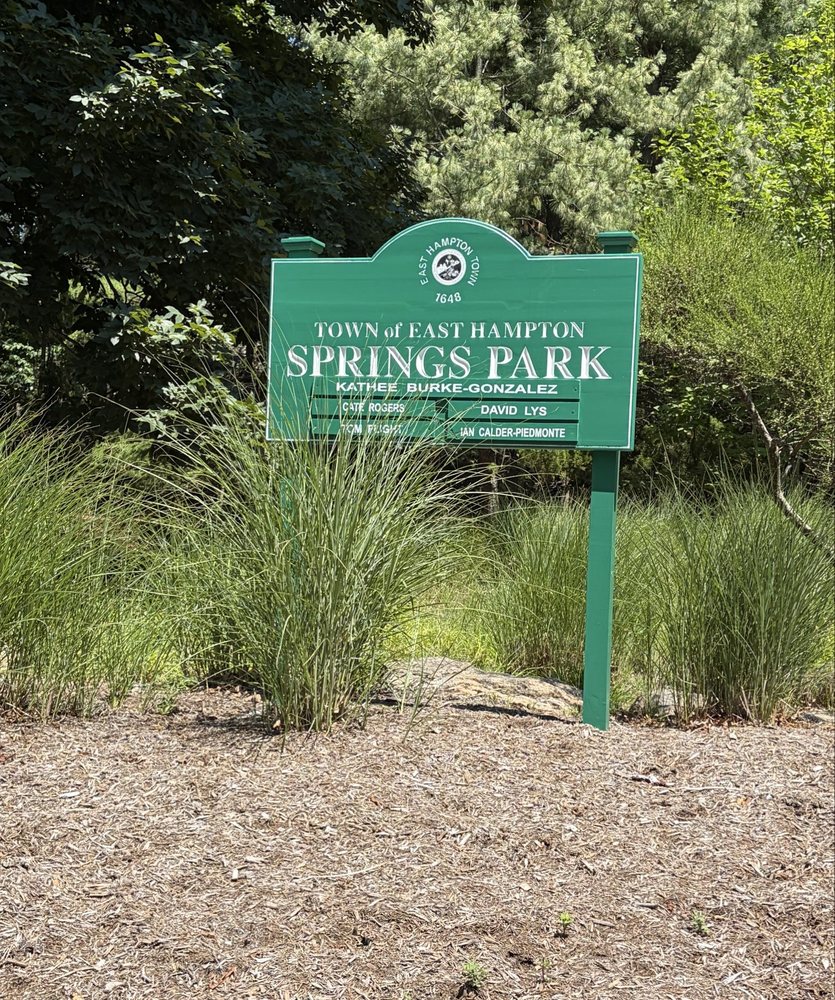
Springs deserves particular attention. This is where Pollock and Krasner lived and worked, and their home and studio -- now the Pollock-Krasner House and Study Center -- remains open to visitors. Springs retains an artistic character that the rest of East Hampton has largely polished away. The housing stock is more modest and the roads less manicured, with a community more year-round in its orientation. For buyers who want to be within the Town of East Hampton without the formality of the Village or the estate section, Springs offers a genuinely different experience.
"Springs retains an artistic character that the rest of East Hampton has largely polished away."
Guild Hall opened on August 19, 1931, funded by Mrs. Lorenzo E. Woodhouse and designed by Aymar Embury II. It was the first multidisciplinary cultural center in the United States to combine a theater and a museum with a community gathering space under one roof. That ambition was unusual for a village of this size, and it established a precedent that East Hampton has maintained ever since. The museum exhibited the Abstract Expressionists early -- Pollock, de Kooning, Krasner -- when showing their work was still a curatorial risk. Guild Hall has recently completed a comprehensive renovation that updates its facilities while preserving its original mission.
The cultural infrastructure extends well beyond Guild Hall. The village supports a density of galleries and independent bookshops that would be notable in a city of any size. This is not decorative culture -- it is the residue of a community that has attracted working artists for nearly a century. That legacy influences the buyer who chooses East Hampton over Southampton: someone who wants proximity to cultural production, not just cultural consumption.
East Hampton rewards the buyer who understands its layers. The Village, the estate section, Georgica Pond, Springs -- each represents a fundamentally different version of East End life, and each attracts a different buyer with different priorities. Our role is to match the right buyer to the right micro-market, because a misalignment in East Hampton is expensive in both dollars and disappointment. Noble's connection to the East End spans more than a decade, and our team's local specialists know which properties are likely to trade before they surface publicly. If you are considering East Hampton, we welcome the opportunity to share what we know.
21,806 people live in East Hampton, where the median age is 45.3 and the average individual income is $77,819. Data provided by the U.S. Census Bureau.
Total Population
Median Age
Population Density Population Density This is the number of people per square mile in a neighborhood.
Average individual Income
There's plenty to do around East Hampton, including shopping, dining, nightlife, parks, and more. Data provided by Walk Score and Yelp.
Explore popular things to do in the area, including Sunset Harbor at EHP Resort & Marina, Bostwick's on the Harbor, and Montauk Market.
| Name | Category | Distance | Reviews |
Ratings by
Yelp
|
|---|---|---|---|---|
| Dining | 0.15 miles | 13 reviews | 3.2/5 stars | |
| Dining · $$$ | 0.71 miles | 72 reviews | 4.1/5 stars | |
| Dining | 0.96 miles | 1 review | 1/5 stars | |
| Dining | 1.01 miles | 23 reviews | 4/5 stars | |
| Dining | 1.06 miles | 4 reviews | 4.5/5 stars | |
| Dining | 1.08 miles | 0 reviews | 0/5 stars | |
| Dining · $$$ | 1.11 miles | 3 reviews | 2.7/5 stars | |
| Dining | 1.23 miles | 6 reviews | 4.7/5 stars | |
| Active | 0.53 miles | 9 reviews | 3.7/5 stars | |
| Active | 0.96 miles | 0 reviews | 0/5 stars | |
| Active | 0.96 miles | 0 reviews | 0/5 stars | |
| Active | 1.15 miles | 2 reviews | 5/5 stars | |
| Active | 1.15 miles | 2 reviews | 3/5 stars | |
| Active | 1.19 miles | 0 reviews | 0/5 stars | |
| Active | 1.27 miles | 9 reviews | 4.8/5 stars | |
| Active | 1.31 miles | 2 reviews | 3/5 stars | |
| Active | 1.37 miles | 2 reviews | 3/5 stars | |
| Active | 1.38 miles | 0 reviews | 0/5 stars | |
| Active | 1.39 miles | 0 reviews | 0/5 stars | |
| Beauty | 0.14 miles | 0 reviews | 0/5 stars | |
| Beauty | 1.01 miles | 0 reviews | 0/5 stars | |
| Beauty | 1.35 miles | 4 reviews | 5/5 stars | |
| Beauty | 1.37 miles | 0 reviews | 0/5 stars | |
|
|
||||
|
|
||||
|
|
||||
|
|
||||
|
|
||||
|
|
East Hampton has 8,633 households, with an average household size of 2.52. Data provided by the U.S. Census Bureau. Here’s what the people living in East Hampton do for work — and how long it takes them to get there. Data provided by the U.S. Census Bureau. 21,806 people call East Hampton home. The population density is 588 and the largest age group is Data provided by the U.S. Census Bureau.
Total Population
Population Density Population Density This is the number of people per square mile in a neighborhood.
Median Age
Men vs Women
Population by Age Group
0-9 Years
10-17 Years
18-24 Years
25-64 Years
65-74 Years
75+ Years
Education Level
Total Households
Average Household Size
Average individual Income
Households with Children
With Children:
Without Children:
Marital Status
Blue vs White Collar Workers
Blue Collar:
White Collar: