Our Featured Listings in the Area
- previous
- next
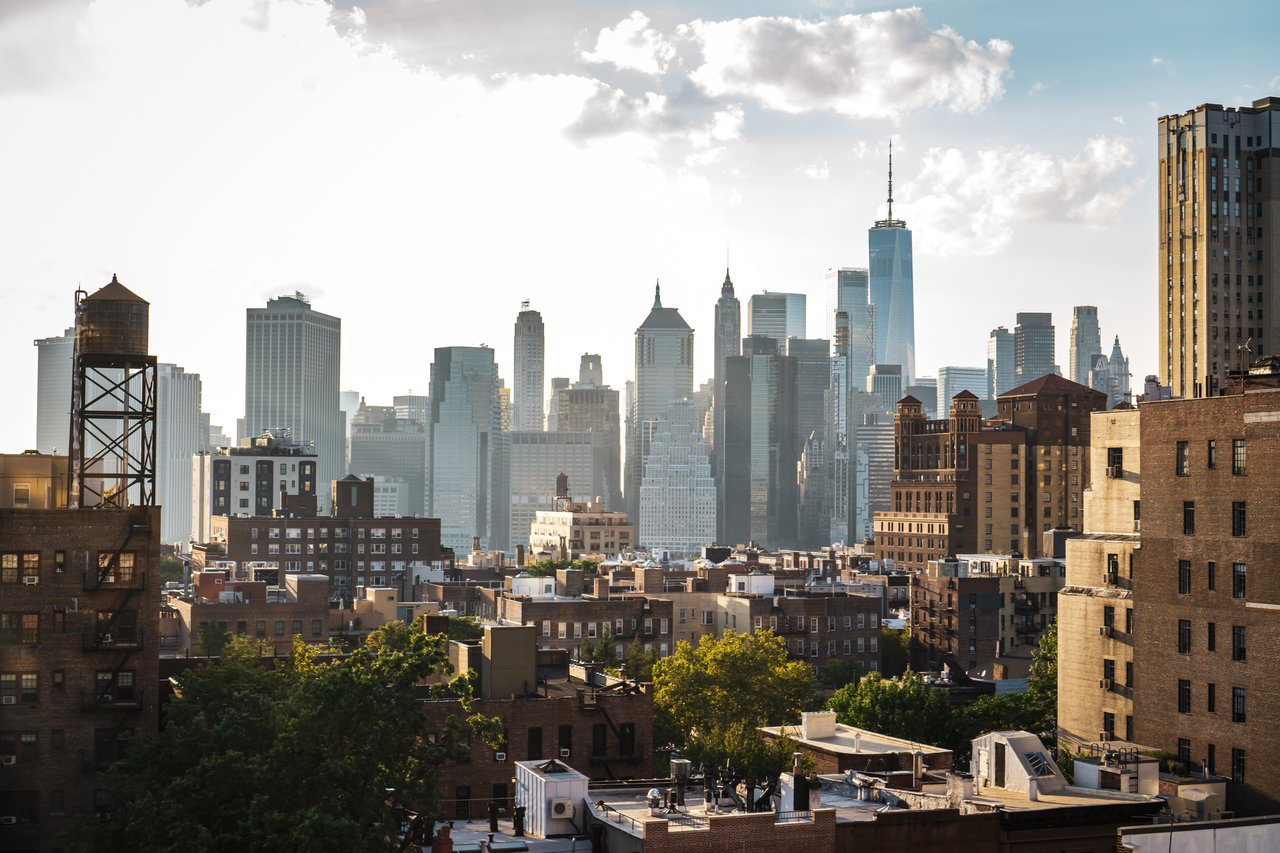
The Financial District is the most dramatically transformed residential neighborhood in Manhattan. For most of the twentieth century, the streets below Chambers were purely commercial: office towers, trading floors, narrow lanes built for foot traffic between banking halls. The idea of living here would have seemed eccentric as recently as the mid-1990s. That is no longer the case. The Financial District is now one of Manhattan's most active residential markets, and the buildings that define it are some of the most architecturally significant in the world.
The transformation accelerated after September 11, 2001. Tax incentives encouraged developers to convert underused commercial buildings into residences, and new construction followed. What emerged was a neighborhood with a residential character entirely different from the rest of downtown: wider streets, taller buildings, more sky.
Cass Gilbert's 1913 masterpiece was, for decades, the tallest building in the world. Its upper thirty floors have been converted into thirty-three luxury condominiums, with the original terra-cotta ornamentation and Gothic detailing preserved. Living in the Woolworth Tower is not simply purchasing an apartment. It is inhabiting a building that defined the New York skyline before the Empire State Building existed.
The Four Seasons Private Residences at 30 Park Place is downtown's tallest residential tower and one of the most significant branded-residence projects in the city. The combination of Four Seasons hotel services with full ownership creates a model that appeals to international buyers and domestic purchasers who prioritize convenience at the highest level. Noble has sold at 30 Park Place, and we understand the specific buyer profile this building attracts.
These are not buildings that were designed to be residential. They were designed to command attention, and they still do.
The Financial District offers something that most of Manhattan cannot: direct waterfront access without crossing a highway. Battery Park anchors the southern tip with unobstructed views of the Statue of Liberty and New York Harbor. The Hudson River esplanade connects northward through Battery Park City and beyond. Brookfield Place provides a covered public space with programming and retail that functions as a community center for the surrounding residential population.
This access to water and open sky is one of the neighborhood's strongest selling points. The density of the streets creates a contrast with the openness of the waterfront that few Manhattan neighborhoods can replicate.
The buyer profile in the Financial District has diversified considerably since the early conversion years. Finance professionals remain a core constituency, drawn by the proximity to Wall Street and the relative ease of the commute. But families have become an increasingly significant segment. New school facilities and the expansion of park space have made the neighborhood viable in ways it was not a decade ago.
International buyers also constitute a meaningful portion of the market. The proximity to major transportation hubs and the availability of branded-residence buildings with hotel-level services appeal to purchasers who split their time across multiple cities.
The Financial District's residential identity is still being written, which is part of its appeal. Buyers here tend to be forward-looking. They see the neighborhood not only for what it is today but for what the trajectory suggests. The commercial-to-residential conversion pipeline continues to produce new inventory, and the infrastructure investments in lower Manhattan have created a neighborhood with a genuinely different feel from the rest of downtown.
The architecture is another differentiator. Nowhere else in Manhattan can you live in a building with a century-old stone facade with fourteen-foot ceilings and the proportions of a former banking hall. The scale is different here, and for a certain buyer, that scale is exactly the point.
We have been active in the Financial District since the residential market began to take its current form. Our familiarity with the conversion buildings and the new developments gives us an informed view that goes beyond what the listing descriptions provide. For buyers considering the Financial District, the critical question is not whether the neighborhood has arrived. It has. The question is which building and which exposure will hold value as the district continues to mature. That is a conversation we are well positioned to guide.
32,471 people live in Financial District, where the median age is 33 and the average individual income is $132,821. Data provided by the U.S. Census Bureau.
Total Population
Median Age
Population Density Population Density This is the number of people per square mile in a neighborhood.
Average individual Income
There's plenty to do around Financial District, including shopping, dining, nightlife, parks, and more. Data provided by Walk Score and Yelp.
Explore popular things to do in the area, including Bill's Lobby Stand, Ingalls & Snyder Investments, and Maiden Lane Properties.
| Name | Category | Distance | Reviews |
Ratings by
Yelp
|
|---|---|---|---|---|
| Dining | 0.06 miles | 0 reviews | 0/5 stars | |
| Shopping | 0.19 miles | 0 reviews | 0/5 stars | |
| Shopping | 0.2 miles | 0 reviews | 0/5 stars | |
| Beauty | 0.56 miles | 0 reviews | 0/5 stars | |
|
|
||||
|
|
||||
|
|
||||
|
|
||||
|
|
||||
|
|
Financial District has 16,356 households, with an average household size of 2. Data provided by the U.S. Census Bureau. Here’s what the people living in Financial District do for work — and how long it takes them to get there. Data provided by the U.S. Census Bureau. 32,471 people call Financial District home. The population density is 129,775 and the largest age group is Data provided by the U.S. Census Bureau.
Total Population
Population Density Population Density This is the number of people per square mile in a neighborhood.
Median Age
Men vs Women
Population by Age Group
0-9 Years
10-17 Years
18-24 Years
25-64 Years
65-74 Years
75+ Years
Education Level
Total Households
Average Household Size
Average individual Income
Households with Children
With Children:
Without Children:
Marital Status
Blue vs White Collar Workers
Blue Collar:
White Collar: