Culture and Architecture, Carrying the Weight of History
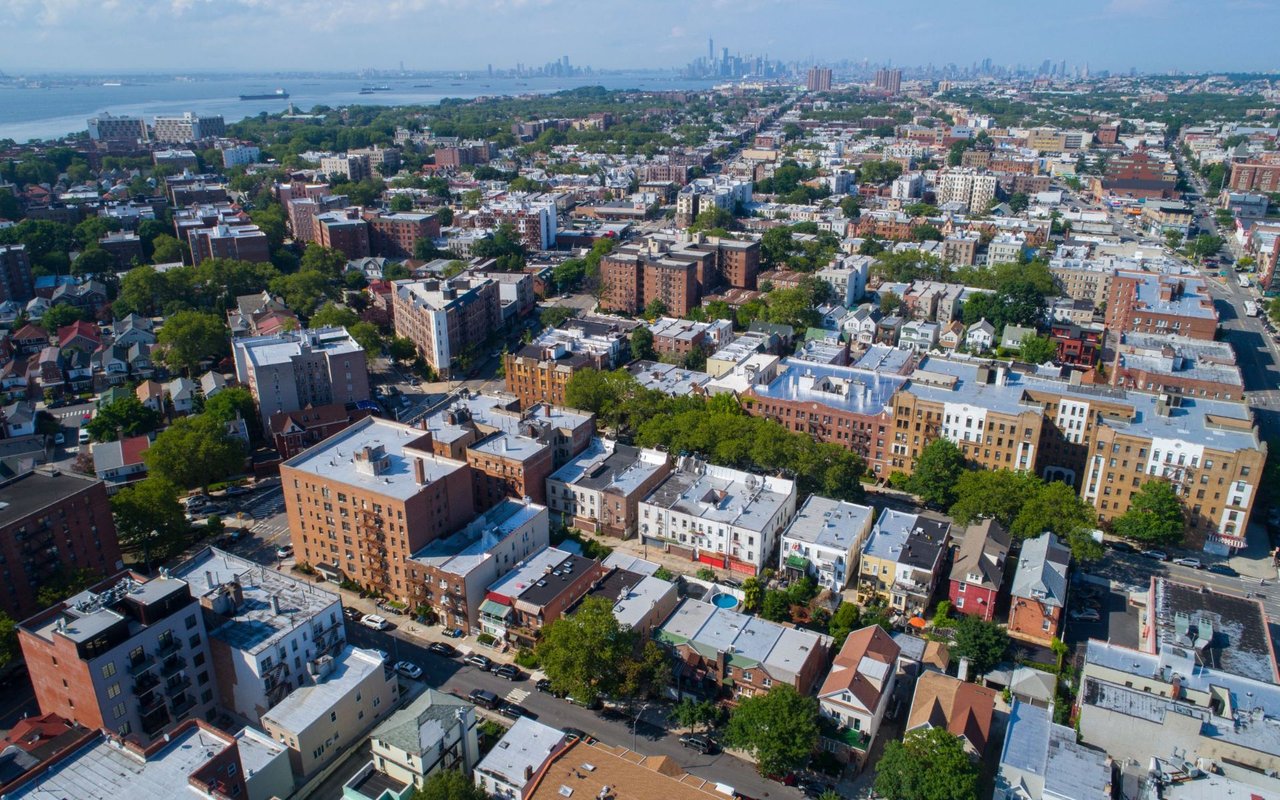
Fort Greene occupies a specific position in Brooklyn's residential landscape: it is a neighborhood where architectural quality and cultural infrastructure converge with an intensity that few places in the city can match. The brownstone blocks here are comparable in condition to Park Slope's finest rows. The Brooklyn Academy of Music anchors a cultural district that has expanded to include the Mark Morris Dance Center and Theatre for a New Audience alongside the BAM Harvey Theater. And the neighborhood's roll call of former and current residents reads like a syllabus: Walt Whitman edited the Brooklyn Eagle here, Richard Wright wrote Native Son on Carlton Avenue. Spike Lee's production company operated from a Fort Greene firehouse for years.
That combination of qualities is not accidental. Fort Greene's proximity to Downtown Brooklyn and its strong transit connections have made it accessible to the creative professionals and performing artists who have shaped its character over successive generations. The neighborhood's identity is inseparable from the people who have chosen to live here, and that continuity of cultural engagement gives Fort Greene a seriousness of purpose that distinguishes it from neighborhoods whose appeal is primarily aesthetic.
Fort Greene Park
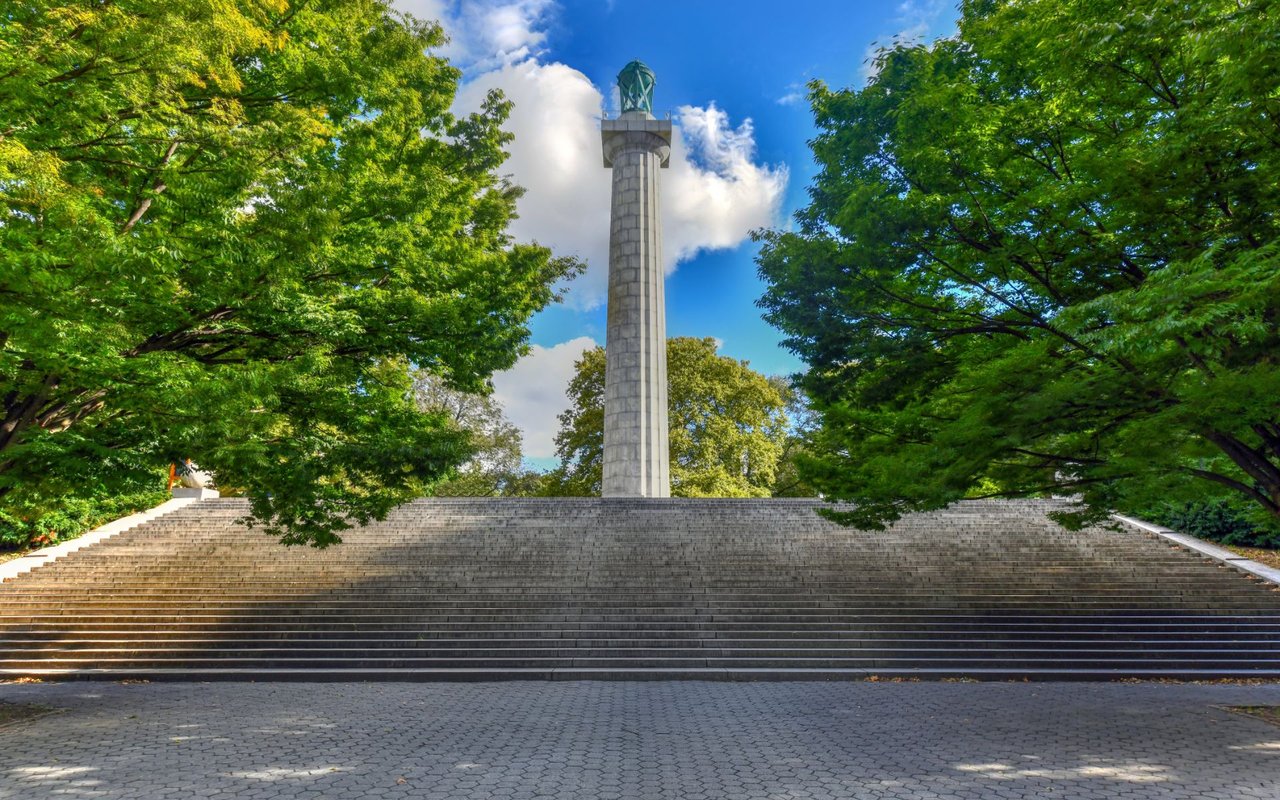
Fort Greene Park was designed by Frederick Law Olmsted and Calvert Vaux in 1867, making it one of the earliest public parks in Brooklyn. The park occupies a hilltop site that provides long views across the surrounding neighborhood and, from its highest point, toward the Manhattan skyline. At its center stands the Prison Ship Martyrs' Monument, a tall Doric column designed by Stanford White to commemorate the more than eleven thousand American prisoners who died on British ships in Wallabout Bay during the Revolutionary War.
The park's hilltop position gives it a different character from the flat, meadow-oriented parks that serve other Brooklyn neighborhoods. The terrain is varied: sloped lawns, mature tree canopy, paved paths that wind around the monument's base. The weekend farmers' market at the park's edge has become a neighborhood gathering point. For the surrounding residential blocks, the park functions as a central reference point, with the most desirable addresses clustering along its perimeter on Washington Park and DeKalb Avenue.
Fort Greene Park was designed by the same hands that created Prospect Park. The ambition was the same, even if the scale was different.
BAM and the Cultural District
The Brooklyn Academy of Music, founded in 1861, is one of the oldest performing arts centers in the country. Its current home, the Peter Jay Sharp Building on Lafayette Avenue, is a Beaux-Arts landmark that houses the Howard Gilman Opera House. The BAM Harvey Theater, a few blocks east on Fulton Street, was renovated by Hardy Holzman Pfeiffer Associates with a deliberate preservation of its ruined grandeur, exposed brick walls and peeling plaster left intact as design elements.
BAM's programming has historically skewed toward the avant-garde: experimental theater, international dance, film retrospectives that draw audiences from across the city. That curatorial identity shapes the neighborhood. Fort Greene attracts residents who take the performing arts seriously and who value proximity to an institution that operates at a level comparable to Lincoln Center but with a sensibility that is distinctly less formal.
The Brownstone Blocks
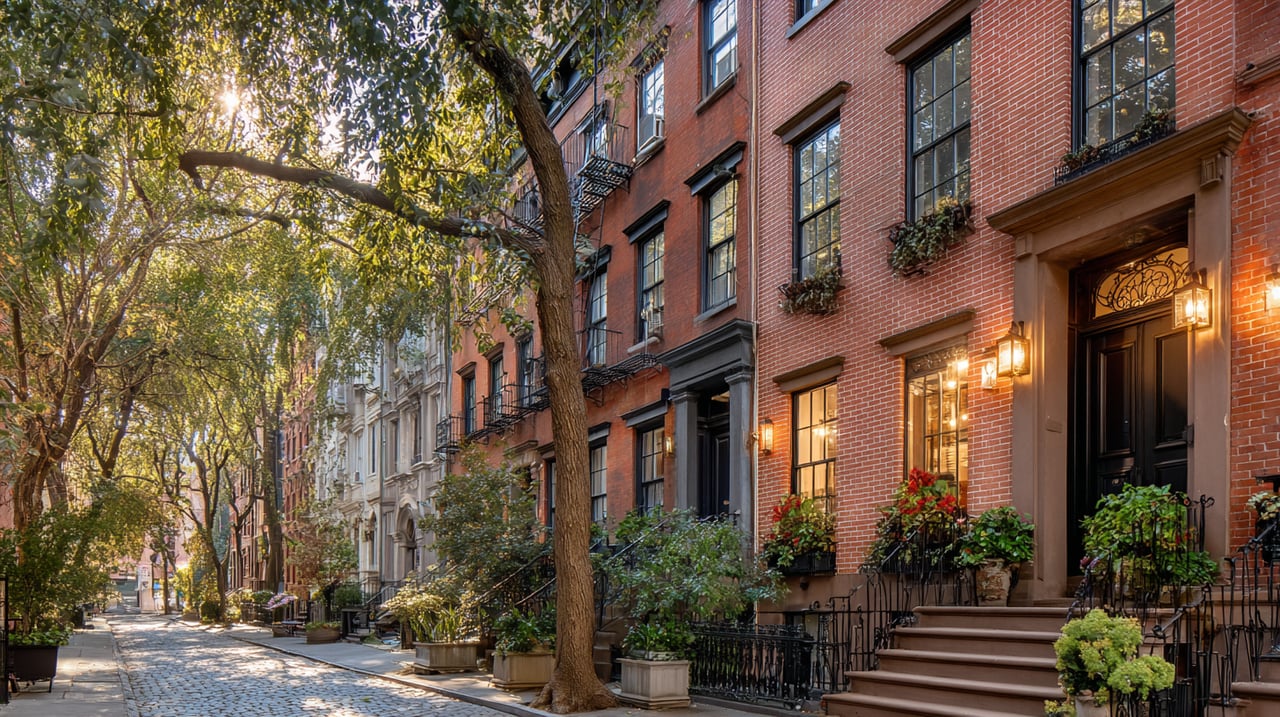
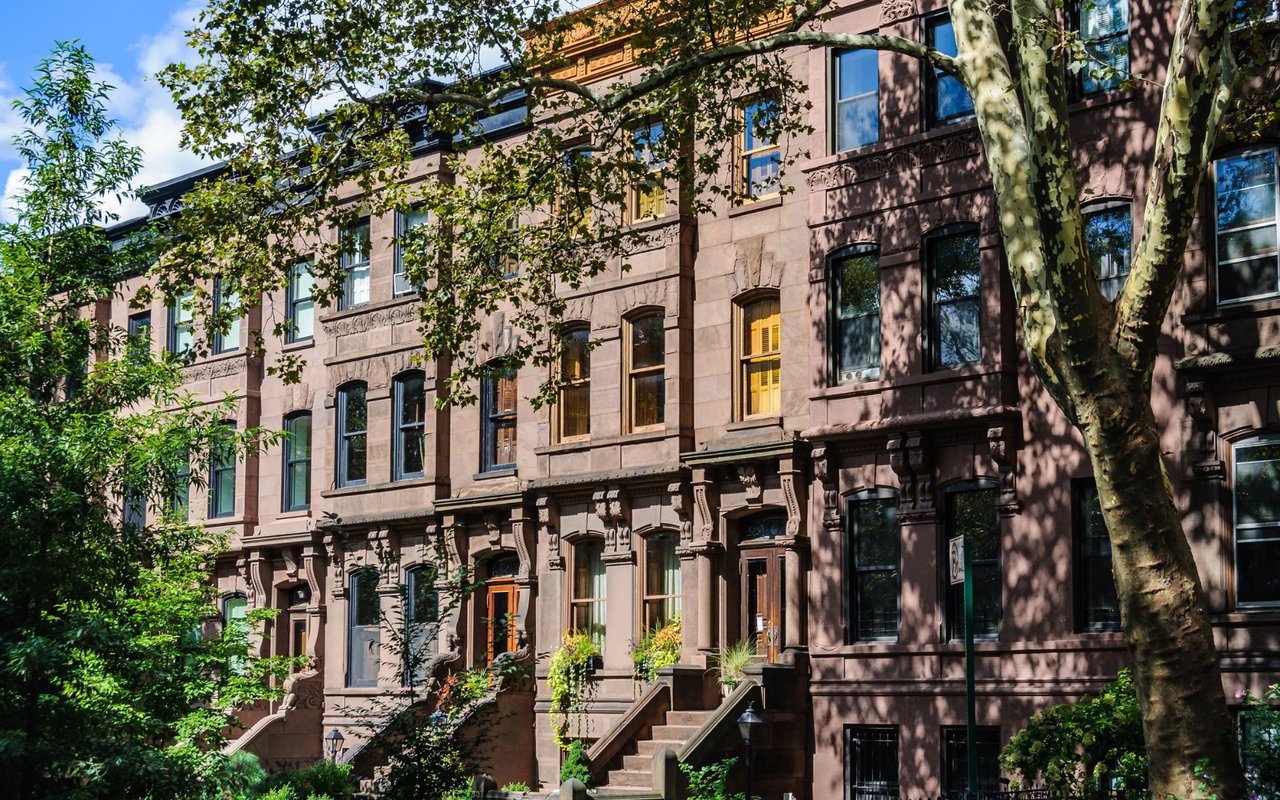
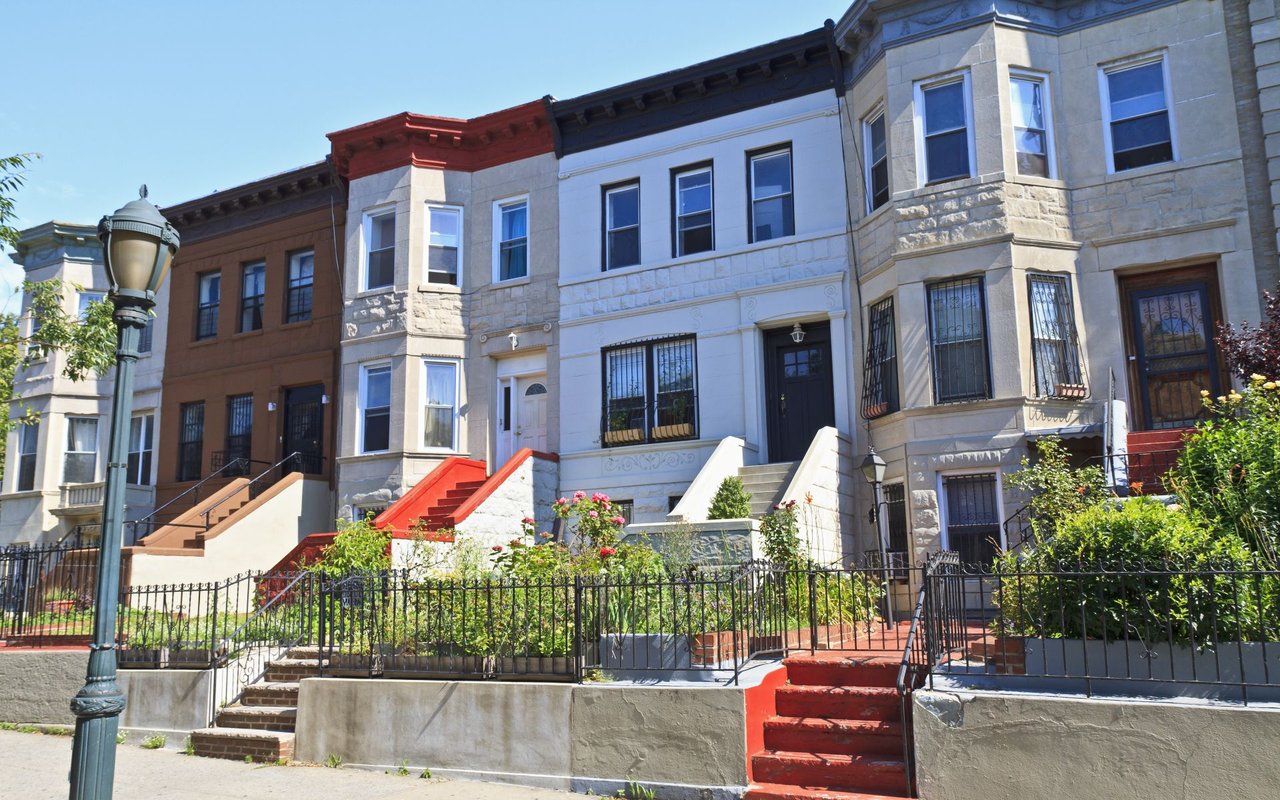
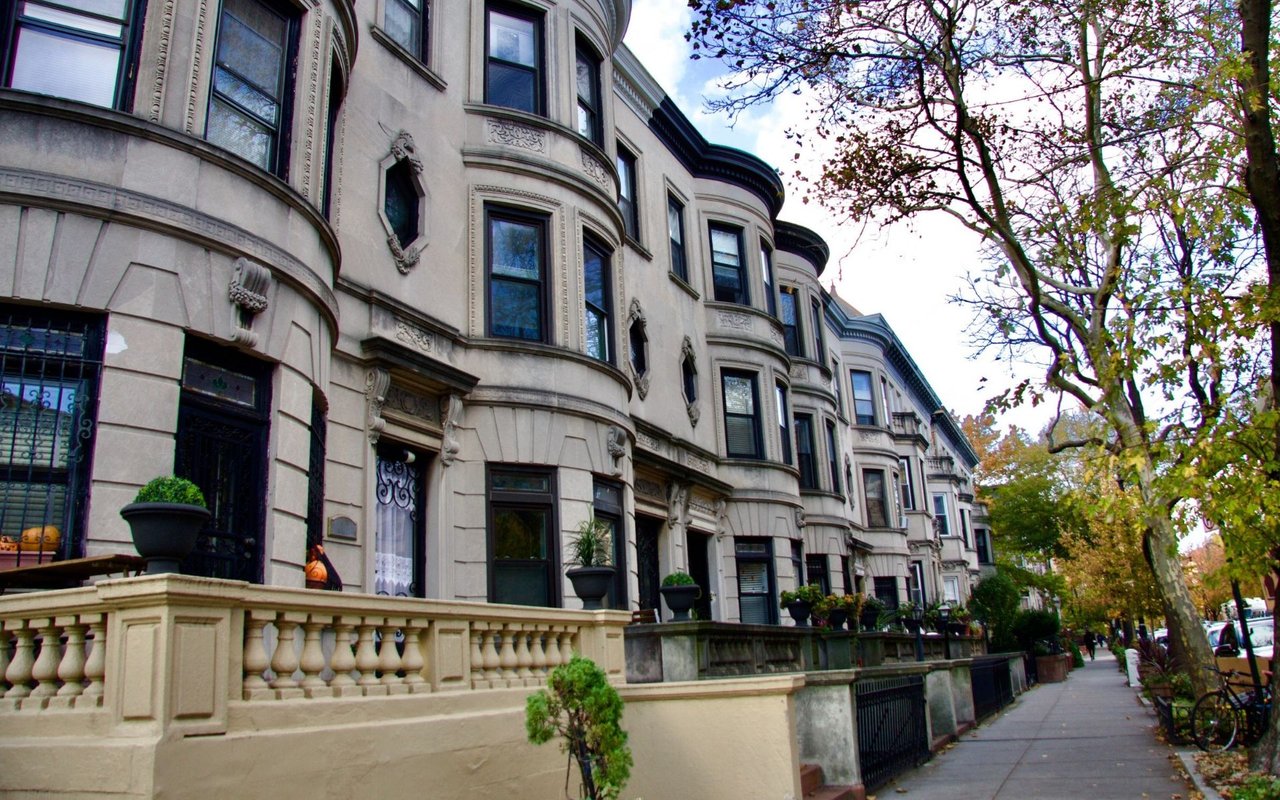
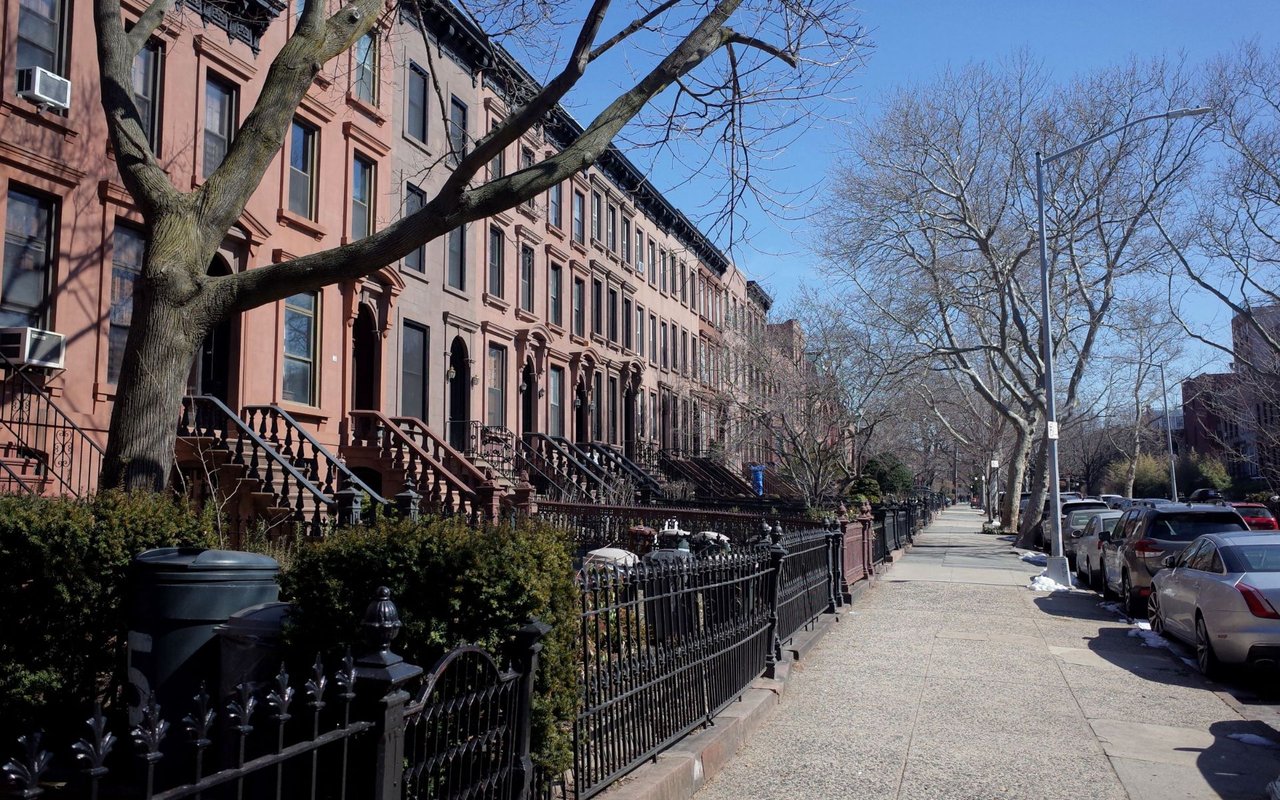
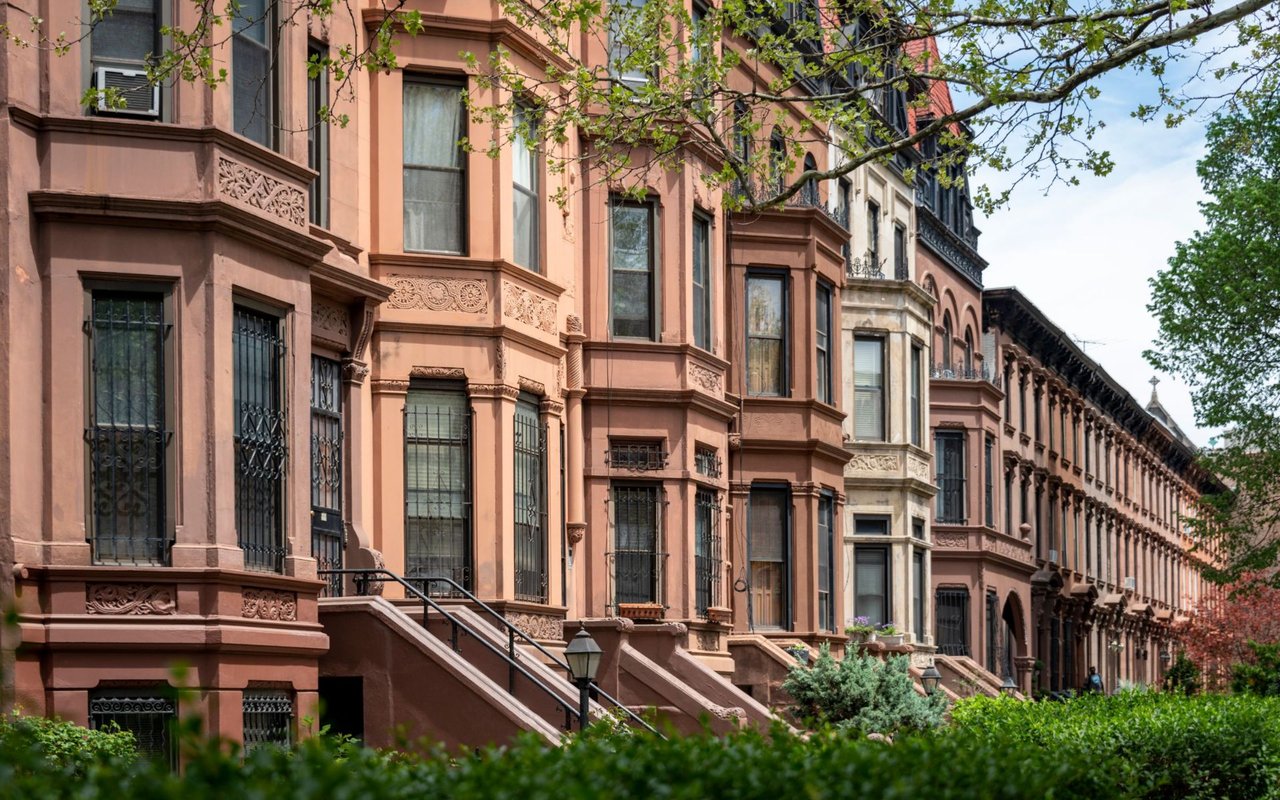
Fort Greene's residential architecture is concentrated along the blocks between Myrtle Avenue and Atlantic Avenue, from Flatbush Avenue Extension on the west to Vanderbilt Avenue on the east. The brownstones here date primarily from the 1860s through the 1890s and include examples of Italianate and neo-Grec alongside Romanesque Revival. The quality of preservation is high. Many buildings retain their original stoops and cornices, with ornamental ironwork intact, and the overall streetscape has a consistency that reflects the neighborhood's relatively compact development period.
The blocks along South Portland Avenue, South Elliott Place, and Cumberland Street are among the most architecturally cohesive in the neighborhood. The row houses face each other across tree-lined streets with a uniformity of scale and material that creates the sense of an outdoor room. The stoops, which are original to the buildings, serve as informal gathering spaces and give the sidewalks a rhythm that is characteristic of Brooklyn's best brownstone blocks.
A Literary Neighborhood
Fort Greene's literary associations are not decorative. They are woven into the neighborhood's physical fabric. Walt Whitman lived on Myrtle Avenue while editing the Brooklyn Daily Eagle and writing some of the poems that would become Leaves of Grass. Richard Wright completed Native Son while living at 175 Carlton Avenue. Marianne Moore lived on Cumberland Street. More recently, the neighborhood has attracted a new generation of writers drawn by the same combination of affordability relative to Manhattan and proximity to cultural institutions that drew their predecessors.
That literary tradition gives Fort Greene a character that transcends its physical attributes. The neighborhood's coffee shops and bookstores function as extensions of a community that takes intellectual life seriously. Greenlight Bookstore on Fulton Street is not merely a retail operation. It is a neighborhood institution that hosts readings, book groups, and conversations that reinforce the area's identity as a place where writing and thinking are valued.
Transit and Proximity to Manhattan
Fort Greene's transit connections are among the strongest in Brooklyn. The Atlantic Avenue-Barclays Center station, which sits at the neighborhood's southeastern corner, is served by nine subway lines and the Long Island Rail Road. The DeKalb Avenue station provides B and Q service along with the R. For residents who work in Manhattan, the commute is comparable to what many Manhattanites experience traveling between neighborhoods within the borough.
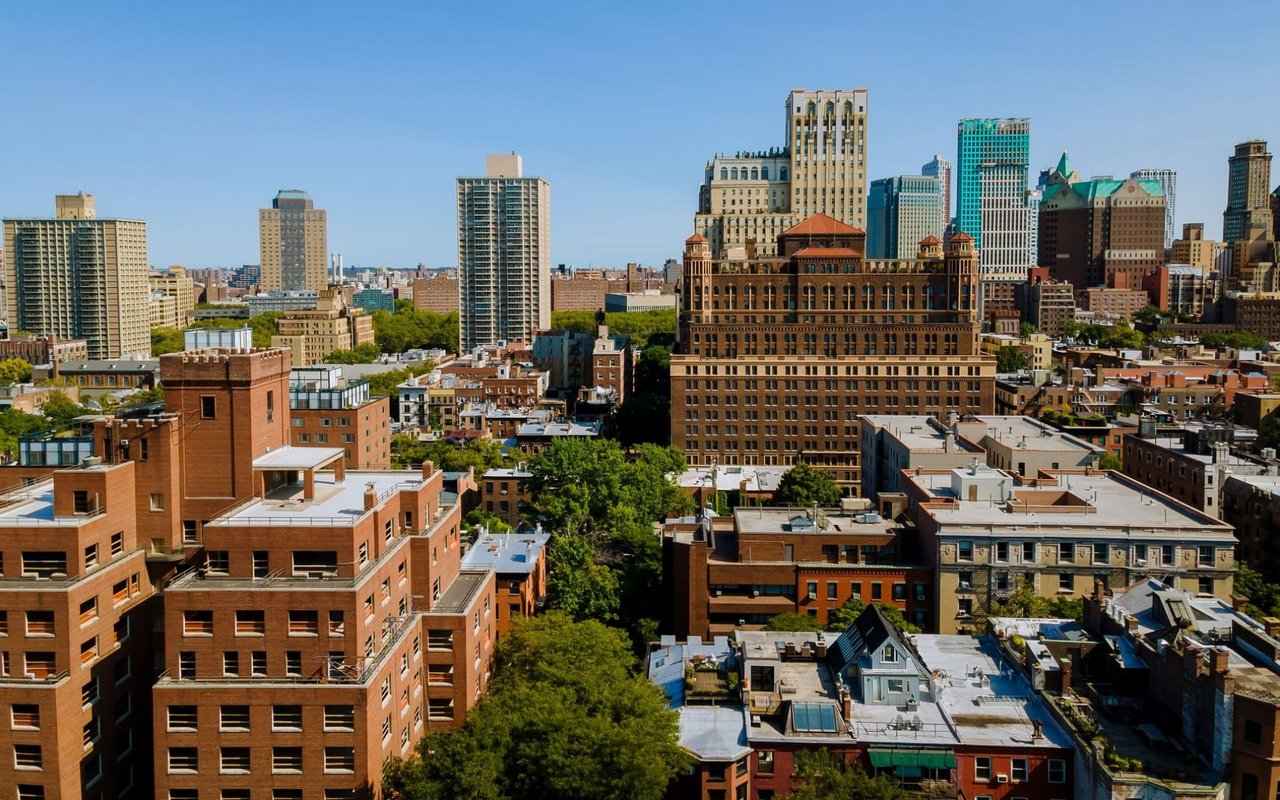
Downtown Brooklyn, with its concentration of office towers and government buildings alongside educational institutions, sits immediately to the west. The proximity means that Fort Greene functions both as a residential neighborhood in its own right and as a convenient base for professionals whose work is centered in the downtown core.
Our Perspective
Fort Greene is a neighborhood where the brownstone quality rivals Park Slope and the cultural infrastructure rivals the Upper West Side. The buyers who do best here are those who value that combination of qualities and who understand that the specific block within Fort Greene matters as much as the neighborhood itself. We bring detailed knowledge of the building stock, the co-op boards, and the renovation constraints that apply within this market. Our clients benefit from that specificity because Fort Greene, like all of Brooklyn's best neighborhoods, rewards informed decision-making over broad assumptions.